
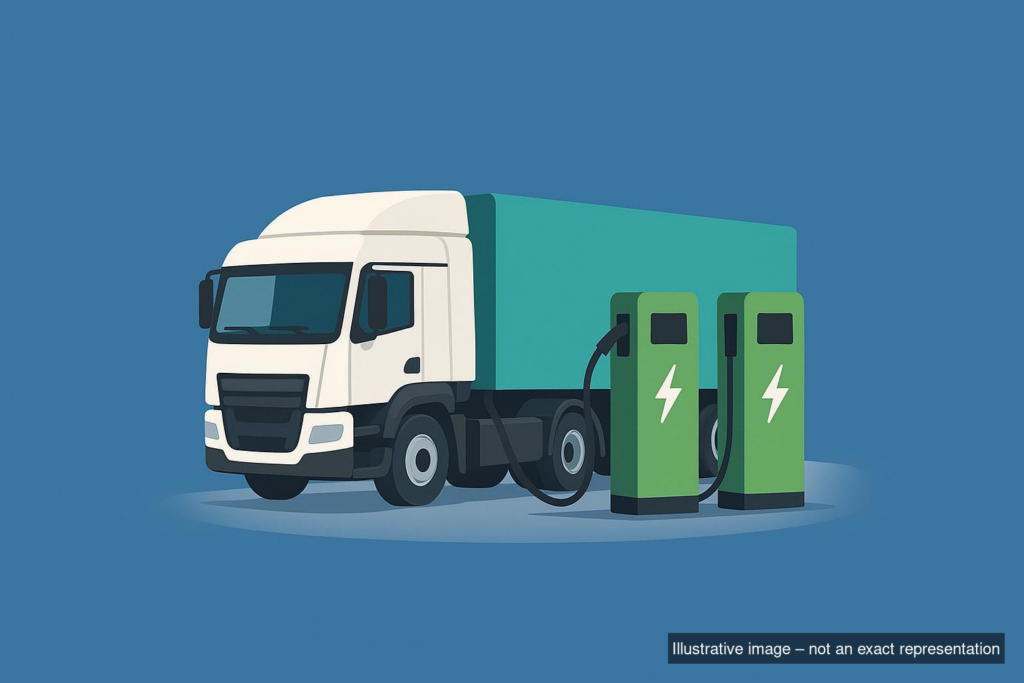
Fleete Launches Largest Commercial Vehicle Charging Hub at Port of Tilbury
Introduction
The electrification of road freight is a growing priority for transport operators, drivers, and compliance professionals. The recent opening of the UK’s largest dedicated commercial vehicle electric charging hub represents a meaningful development in supporting the transition to zero-emission heavy goods vehicles (HGVs). Understanding this facility’s capabilities and strategic importance is essential for those involved in fleet management and compliance.
Overview of the Charging Hub
Fleete has launched a 5MW electric vehicle charging hub at the Port of Tilbury in Essex. The facility features 16 ultra-rapid chargers, enabling up to 16 electric HGVs to charge simultaneously. This site is the first in a planned network of shared-use commercial vehicle charging hubs designed to accelerate fleet electrification without requiring operators to invest in costly depot grid upgrades.
Funding and Partnerships
The project was delivered in partnership with the Port of Tilbury and Thames Freeport. It received £1 million from the government’s Thames Freeport Seed Capital Programme, with additional support from the Zero Emission HGV and Infrastructure Demonstrator (ZEHID) Programme, funded by the Department for Transport and Innovate UK. These collaborations highlight the role of public and private sector cooperation in advancing decarbonisation efforts.
Technical Specifications and Strategic Location
The charging hub includes six 540kW Siemens Flex chargers with 12 Flex 500A dispensers across three charging islands, each capable of future upgrades to the megawatt Charging System (MCS) standard. Additionally, four charging points supplied by Power Electronics provide up to 270kW, with potential upgrades to 360kW, as part of the eFREIGHT 2030 programme.
Strategically located at one of the UK’s busiest multimodal freight hubs, the facility serves zero-emission HGVs operating within the port estate and along the A13 corridor into London. It is also expected to support contractors working on major national projects, such as the Lower Thames Crossing, where electric trucks are being used to reduce construction emissions.
Industry and Government Perspectives
Chris Morrison, CEO of Fleete, emphasised that shared high-capacity infrastructure can overcome key barriers to electrification, including grid constraints and land availability. Aviation, Maritime and Decarbonisation Minister Keir Mather described the opening as “a significant milestone” in decarbonising road freight, underscoring the importance of public-private collaboration.
Local and industry leaders, including representatives from Thames Freeport and Logistics UK, welcomed the development. They noted that infrastructure of this scale in a strategic location is critical to encouraging wider adoption of electric HGVs, particularly among smaller operators.
Mi Compliance Insight
The establishment of large-scale, shared-use charging hubs is a positive step towards enabling the widespread adoption of electric HGVs. Transport operators and compliance professionals should monitor developments in charging infrastructure closely, as these facilities can reduce operational barriers and support regulatory compliance related to emissions targets. For tailored advice on integrating electric vehicles into your fleet and ensuring compliance, please contact Mi Compliance.

0333 090 8899Office
07868 780254Call/Whatsapp
info@micompliance.co.ukEmail
178 CROW LANE, ROMFORD RM7 0ES
MiComplianceUK
Socials