
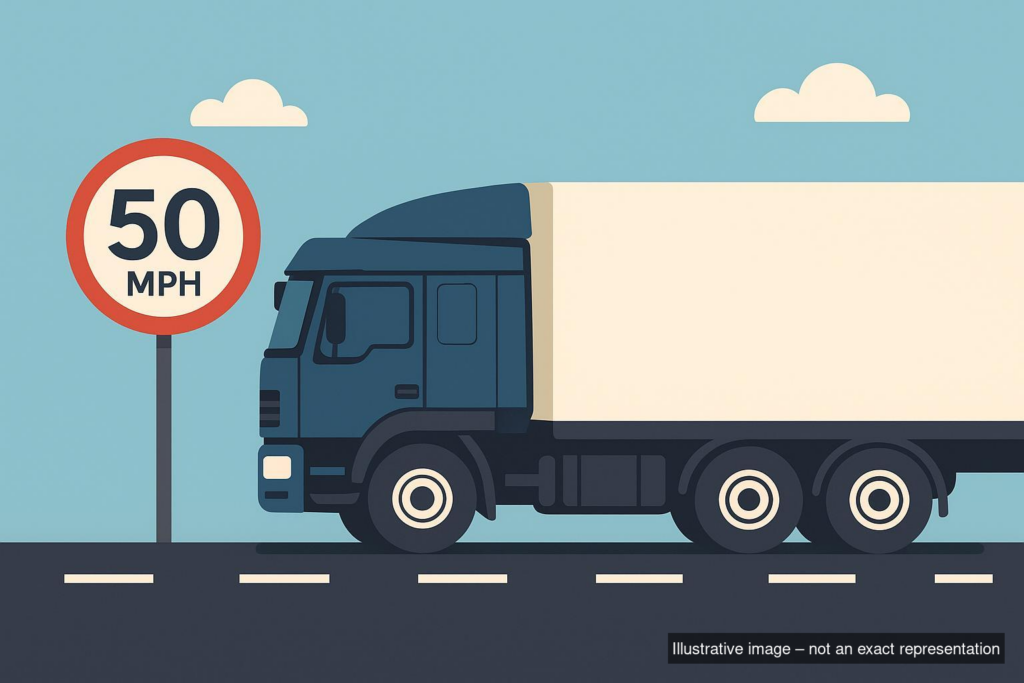
Road Haulage Association Supports Scotland’s HGV Speed Limit Increase
Introduction
The Scottish Government has announced plans to increase the heavy goods vehicle (HGV) speed limit on trunk roads from 40mph to 50mph. This change is significant for transport operators, drivers, and compliance professionals as it may impact road safety, emissions, journey times, and cross-border operations.
Background and Consultation
Transport Secretary Fiona Hyslop confirmed that the government will begin the Parliamentary process to amend the trunk road speed limit following a public consultation. The Road Haulage Association (RHA) has welcomed the proclamation, highlighting productive discussions with the government and the potential benefits for the haulage industry in Scotland.
Safety and Environmental Impact
A 2018 Transport Scotland report evaluated a trial on the A9 between Perth and Inverness, where the HGV speed limit was raised to 50mph alongside the introduction of average speed cameras. The study compared data from 2011–2013 (before the changes) with 2014–2017 (after implementation) and found:
- A 10% reduction in fatal and serious collisions.
- A 32% decrease in fatal and serious casualties.
- A 20% reduction in fatal collisions.
- A 40% decrease in fatal casualties.
The report also noted fewer complaints from the public about slow-moving lorries, which were less likely to lead slow platoons of cars and provoke aggressive behaviour.
Evidence from RHA members suggests that HGV engines operate more efficiently at 50mph than at 40mph, perhaps reducing fuel consumption and emissions. Transport Scotland acknowledged this possibility but noted that no quantitative data on fuel efficiency was available.
Comparative Findings from England and Wales
In 2015, the HGV speed limit on single carriageway A roads in England and Wales was increased from 40mph to 50mph. A 2020 Department for Transport (DfT) report analysed ten years of data before the change and 33 months after. The report concluded that there was no evidence of an increase in collisions involving HGVs following the speed limit change.
The DfT also estimated that the speed limit increase would generate benefits of £226 million by 2031, primarily through journey time savings and reduced vehicle operating costs.
Implications for Scotland and Cross-Border Operations
Transport Scotland has indicated that aligning the HGV speed limit with that of England and Wales would reduce confusion for drivers crossing the border. Hauliers reported time savings on the A9 route ranging from 10 to 30 minutes, with some able to schedule additional deliveries as a result.
Following these findings, Transport Scotland included the potential speed limit change in its National Speed Management Review conducted in 2021 and 2022, with further consultation planned.
Mi Compliance Insight
Transport operators and compliance professionals should monitor the progress of the Parliamentary process and prepare for the potential speed limit change. Adjustments to journey planning, driver training, and vehicle maintenance schedules might potentially be necessary to optimise safety, efficiency, and compliance. For tailored advice or support, contact Mi Compliance.

0333 090 8899Office
07868 780254Call/Whatsapp
info@micompliance.co.ukEmail
178 CROW LANE, ROMFORD RM7 0ES
MiComplianceUK
Socials